From AI Assistant to AI Facilitator
Educational AI is evolving quickly. For years, most tools acted as assistants—helping with tasks like grading, answering FAQs, or generating explanations. Useful, yes, but limited in their ability to transform learning.
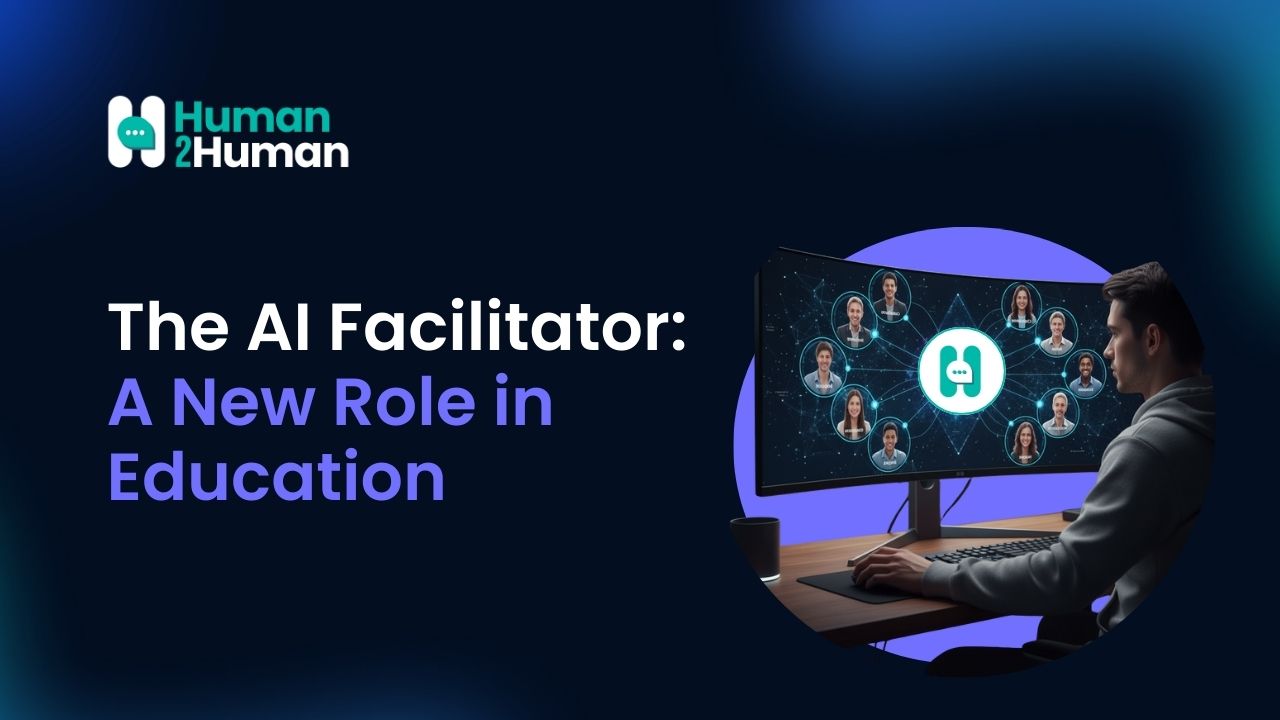
A new class of tools is emerging: AI facilitators. These systems don’t just provide answers—they guide learners through a process of thinking, questioning, and applying their knowledge.
OpenAI’s new ChatGPT Study Mode illustrates this shift. Instead of revealing solutions, it uses Socratic questioning to nudge learners toward understanding, step by step, as shown in ChatGPT Study Mode.
Google is doing something similar with Guided Learning, built on its LearnLM model, which encourages deeper reasoning rather than shortcuts.
Across the landscape, the trend is clear:
AI is moving from answer dispenser to learning companion—one capable of facilitating richer, more active learning.
What Makes a Great Facilitator?
Great facilitators—whether human or artificial—help learners operate in their Zone of Proximal Development, the space between what they can do alone and what they can achieve with support. They do this by breaking tasks into manageable steps, prompting reflection, and offering timely encouragement.
AI is beginning to emulate many of these behaviors. ChatGPT’s Study Mode, for example, adapts when a learner makes a mistake, encouraging them to reconsider instead of simply correcting them.
Emerging research goes even further. Studies on empathy-aware AI show that systems can detect signs of confusion or frustration and adjust their approach accordingly. In group settings, AI could invite quieter participants to contribute, guide discussions back on track, and ensure balanced participation—mirroring what skilled human facilitators do.
The result is an assistant that not only supports individual learners but also helps orchestrate meaningful group interactions.

Consistency and Quality at Scale
One of the key advantages of AI facilitators is their ability to bring consistency and structure to learning at scale. Human instructors can lead a handful of discussions at once. AI can facilitate hundreds simultaneously.
In one study, AI moderated multiple small-group sessions at once, guiding participants with structured prompts and applying consistent evaluation criteria across groups, as demonstrated in this research.
Learners described these discussions as more engaging and productive because the AI kept conversations focused and equitable.
This level of consistency is difficult—if not impossible—for human facilitators to maintain in large cohorts. Yet with AI, it becomes an effortless part of the learning architecture.
Educators Remain in Control
AI facilitators do not replace educators—they empower them.
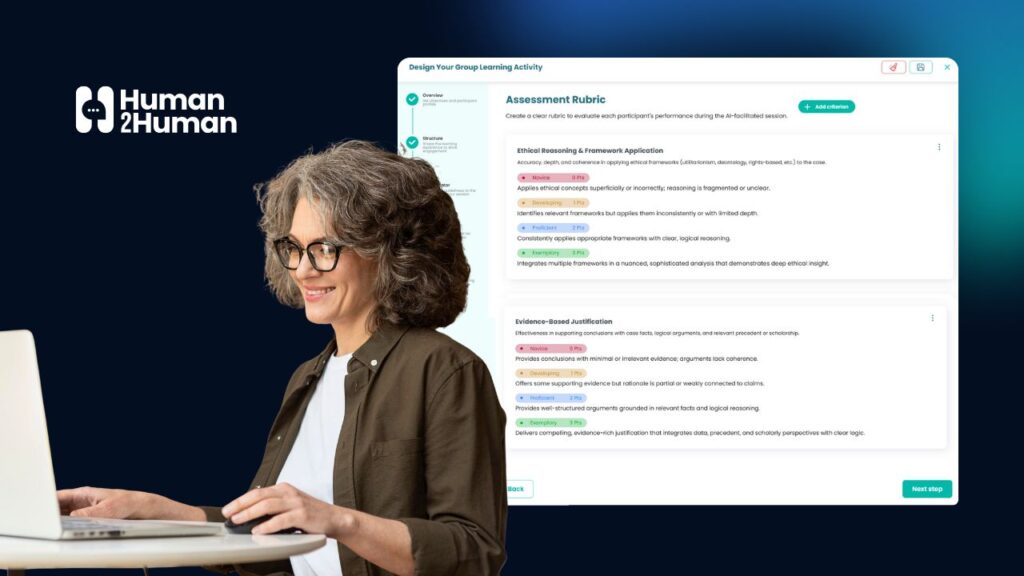
Educators define the goals, content, and criteria for success. The AI enforces this structure, supports learners in real time, and provides feedback aligned with the instructor’s rubric.
Tools like ChatGPT Study Mode help identify where students struggle, and institutional collaborations such as the OpenAI–CSU partnership demonstrate how educators retain authority while AI assists with analysis and scale.
By automating repetitive tasks and moderating discussions, AI frees instructors to focus on the irreplaceable parts of teaching: mentoring, designing learning experiences, and making meaningful interventions.
Redesigning for the AI–Human Partnership
To unlock the full value of AI facilitators, learning environments will need thoughtful redesign. Instructors may choose to let learners practice foundational skills with an AI tutor before class, reserving live sessions for richer group discussions. They may integrate AI-moderated peer reviews or simulations into the curriculum, followed by human-led debriefs.
As tools like Human2Human.ai demonstrate, the future of learning lies in blending human insight with AI-supported collaboration. Courses will evolve into ecosystems where learners alternate between individual practice, AI-guided group work, and instructor-driven reflection.
This partnership offers the best of both worlds: the empathy and creativity of humans with the consistency and scalability of AI.

Final Thoughts
AI in education is entering a stage that finally reflects how people truly learn—through dialogue, guided exploration, and meaningful interaction.
With the emergence of AI facilitators, the paradigm is shifting from tools that simply provide answers to systems that support thinking, encourage collaboration, and structure the learning process.
OpenAI’s Study Mode, designed to guide learners step-by-step, represents this evolution (ChatGPT Study Mode). Google’s Guided Learning similarly emphasizes understanding over shortcuts.
This evolution mirrors decades of learning science. Vygotsky’s Zone of Proximal Development shows that learners grow fastest when guided at just the right level of challenge.
Research on empathy-aware AI demonstrates the potential for systems that adapt to learner emotions in real time. Studies on AI-moderated peer interaction confirm that structured, AI-supported discussions can be more engaging, more equitable, and more scalable than traditional formats, as seen in this study.
All of this reinforces a simple truth: learning accelerates when conversations are guided thoughtfully—and when every participant receives consistent support.
This is precisely the landscape Human2Human.ai is built for. While most tools focus on individual tutoring, Human2Human.ai operationalizes the role of the AI facilitator in group learning, enabling structured, real-time interactions that mirror the dynamics of effective classrooms and collaborative workplaces.
By merging human insight with AI-driven structure, Human2Human.ai creates environments where collaboration is not peripheral but central—where active, social learning becomes the default.
The result is a deeper, more equitable learning experience for every participant.